What the New 21st Century ROAD to Housing Act Actually Means for Buyers, Sellers, and Agents

What the New 21st Century ROAD to Housing Act Actually Means for Buyers, Sellers, and Agents
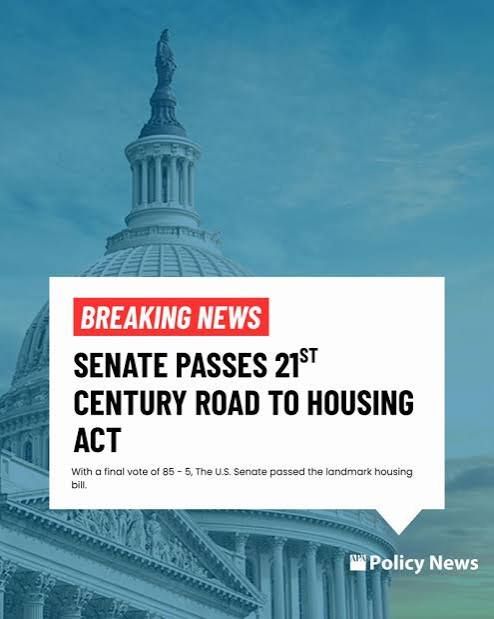
There's a new federal housing law that took effect this year, and unlike a lot of legislation that sounds like background noise, this one actually touches real estate transactions in ways worth knowing about. I broke it down on Tuesday training, and you can listen to the full session on our podcast, Free Beer and Real Estate.
Where This Law Came From

The House and the Senate each had their own housing bill working through committee, the Housing for the 21st Century Act on the House side and the ROAD to Housing Act in the Senate. Rather than pick one, Congress combined them, and the merged bill, now officially the 21st Century ROAD to Housing Act, was signed into law on July 11, 2026. It's not one sweeping overhaul. It's more like a stack of smaller fixes, pilot programs, and grant incentives aimed at two problems: the national housing shortage, and the restrictions that make it hard to build.
The Institutional Investor Cap, and Why I'm Skeptical It Changes Much
The headline that got the most attention is a cap on institutional investors: once a company owns 350 or more single-family homes, the law blocks it from buying any more, with an exception carved out for build-to-rent developments built specifically as rental housing. On the surface, that sounds like a big win for buyers tired of competing with deep-pocketed investors. My honest take is that it probably won't move the needle much.
Here's why. The investors I actually work with are nowhere near that scale. My biggest investor client owns around 150 properties, mostly single-family homes with a handful of duplexes and triplexes mixed in, and I own 10 properties myself, soon to be eight. Those numbers are typical. The truly massive institutional buyers were never a huge share of the competition in most markets to begin with, and if a company at that scale really wants to keep buying, opening another LLC isn't exactly a high bar to clear. I'd compare it to what Canada did a few years back, banning foreign buyers from purchasing single-family homes outright. It didn't meaningfully move prices. I expect a similar story here. The intent behind this piece of the law is reasonable. I just don't think it's the part that ends up mattering most.
As for build-to-rent, that carve-out lets institutional money keep building purpose-built rental communities even past the 350-home threshold. I haven't seen much of that model in Cleveland yet, since construction costs here don't pencil out against realistic rents, but I have a client with a connection to a company exploring it locally, so it may be coming.
Freeing Up the Supply Side
The bigger, less flashy part of this law is aimed at the actual bottleneck: builders can't produce homes fast enough to catch up with demand, and a lot of that comes down to permitting and zoning restrictions at the local level. A few specific changes here. The law expands categorical exclusions under federal environmental review requirements and gives HUD more authority to hand review responsibilities to states and localities, which should speed up the approval process for new housing projects. It also creates a $200 million a year competitive grant program, aimed at rewarding local governments that streamline permitting, add zoning density, or otherwise make it easier to build. That program runs for seven years. How exactly a city or township applies for that money is a good question I don't have a full answer to yet, but the incentive itself is a real one.
The law also eliminates an outdated requirement that manufactured homes stay on a permanent chassis in order to qualify, which should make it easier to place manufactured housing on a permanent foundation. Worth clarifying since people mix these up: manufactured housing is what most people picture as a trailer home. Modular housing is different. It's a regular house built in sections inside a factory, then trucked to the site and assembled with a crane, finished on site with the roofline, siding, and utility connections completed after the pieces are set. Modular construction also sidesteps weather delays since the work happens indoors, which matters a lot in a market like ours with real winters.
Finally, a Process to Challenge a Low Appraisal

This is the one that hits closest to home for me personally. If you've ever had an appraisal come back low with no real way to push back on it, you know how frustrating that is, especially when the appraiser isn't familiar with your specific market. The law now requires lenders to have an actual, documented process letting buyers request a second appraisal or a value reconsideration when they believe the number is wrong. That doesn't mean every low appraisal gets overturned, and if you already expected a low number and built in an appraisal gap or had that conversation with your client ahead of time, this may not change much for that deal. But for the appraisals that come in low and don't hold up to scrutiny, there's now supposed to be an actual path to challenge it instead of just accepting it and moving on.
A Possible Opening for Small-Dollar Mortgages
Here in Cleveland, we still have plenty of homes selling well under $100,000, and getting a mortgage on one of those has been a real problem for years. The reason traces back to existing rules that cap how much a lender can charge as a percentage of the loan amount, originally meant to protect consumers from predatory lending. The unintended side effect is that on a $60,000 loan, that percentage cap doesn't cover what it actually costs a lender to originate and service the mortgage, so a lot of lenders simply stopped offering loans that small. This new law directs the Consumer Financial Protection Bureau to study lender compensation and evaluate whether those cost thresholds need to change for mortgages under $100,000. It's a study and evaluation directive, not a done deal yet, but it's the first real acknowledgment I've seen that this problem needs a fix that doesn't rely on a subsidy. If you work in a market with lower-priced housing stock, it's worth asking your lenders directly what their minimum mortgage amount actually is right now, because for a lot of them it's still higher than it should be.
What This Actually Means for You
For agents, the realistic upside is less competition from the largest institutional buyers, a real process for challenging bad appraisals, and potentially faster appraisal turnaround if some of these supply-side fixes start working. For buyers, the same appraisal and lending changes apply, plus whatever relief eventually comes from more housing supply, though that's a slow-moving process, not an overnight shift. For sellers, I don't think the institutional investor cap meaningfully reduces your buyer pool, based on how the Canada comparison played out, but the other changes should make it somewhat easier for buyers to actually get financed and close.
None of this is legal or financial advice, and this is my summary, not the full text of the bill. If any piece of it sounds like it applies to you, I'd encourage you to dig into the specifics yourself or talk to your lender or attorney about how it plays out in your situation. Overall though, and I don't say this often about a piece of federal legislation, I think this one leans genuinely useful for agents, buyers, and sellers alike.
If you want to talk through how any of this affects your market, or you're an agent looking for more training like this, join us for Tuesday training or reach out to me directly at mike@21mike.com.
Mike Ferrante
The Mike Team at LPT Realty
www.21mike.com
Google Business Profile
+1 (216) 373-7727
Categories
Recent Posts