Investing in Aurora: Why HOA and Subdivision Fees Deserve a Second Look
Investing in Aurora: Why HOA and Subdivision Fees Deserve a Second Look
By Mike Ferrante, Broker Associate, Mike Team at LPT Realty
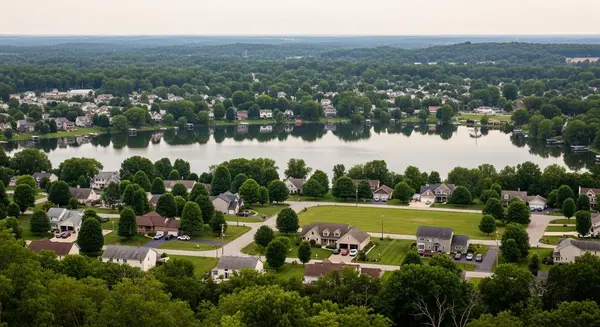
Aurora has some genuinely appealing rental inventory, especially in neighborhoods built around private lakes, golf courses, or marina style amenities. But I've seen firsthand how easy it is for an investor to underestimate the carrying costs on these properties, because the HOA math isn't always as simple as one line item.
The fee structure that catches people off guard
In some Aurora subdivisions, you're not just paying a single association fee. There can be a base HOA fee plus a separate subdivision or amenity fee tied to something like a private lake, marina, or shared recreational area, and the second fee isn't always front and center when a property first comes up for sale. I've dealt with this directly on a property I've been involved with in one of these communities, where getting a straight answer on the full fee structure from the property management company took more effort than it should have. It's the kind of detail that's easy to miss if you're only glancing at the listing sheet instead of asking the association directly.
Why this matters for your cash flow math
An extra fee that isn't accounted for in your initial underwriting can quietly erode a rental's return. If you're running numbers based on the base HOA fee alone and there's a second fee layered on top, your actual monthly carrying cost could be meaningfully higher than your spreadsheet says. That's the kind of detail that turns a rental you thought penciled out into one that barely breaks even, and it's the kind of gap that only shows up once you've already closed if you don't dig for it beforehand.
What to ask for before you make an offer
Request the complete fee schedule in writing, not a verbal summary, and ask specifically whether there's more than one association or fee source tied to the property. Ask about the history of special assessments too, since a community with aging shared infrastructure, docks, a clubhouse, shared roads, can hit owners with a large one-time assessment that a monthly fee number won't warn you about.
Where this pays off
None of this means avoid these communities. Amenity-rich subdivisions in Aurora often rent well precisely because of those amenities, and tenants are frequently willing to pay a premium to live near a private lake or a golf course. The point is to underwrite the real cost structure before you buy, not after your first HOA statement surprises you.
Getting straight answers from property management
Not every property management company responds quickly or clearly when you ask for a full fee breakdown before closing. I've found it takes persistence to get a complete answer in writing rather than a verbal estimate that leaves out a fee or two. Build extra time into your due diligence period for this specifically, and don't let a slow-to-respond management company push you into closing before you've confirmed the numbers in writing.
How this affects financing too
Lenders factor HOA and association dues into your debt-to-income calculation, so an underestimated fee doesn't just hurt your cash flow after closing, it can affect what you actually qualify to borrow in the first place. Get the real number to your lender early, not after you're already under contract and discover the qualifying math has changed.
Weighing this against Aurora's non-HOA inventory
Aurora also has plenty of housing stock outside these amenity subdivisions, without the extra fee layers, where the rental math is more straightforward. Neither option is automatically better. A no-HOA property is simpler to underwrite but may rent for less without the amenity draw, while an amenity community can command higher rent but requires the extra diligence we've covered here. Decide which tradeoff fits your investment style before you start touring, rather than discovering the difference property by property.
Reading the HOA's meeting minutes and reserve fund
Beyond the current fee schedule, ask for recent HOA meeting minutes and the current reserve fund balance. A community that's underfunding its reserves is more likely to hit owners with a special assessment down the road, even if today's monthly fee looks reasonable. This is a step a lot of investors skip, and it's one of the more telling documents available to you before you commit to a purchase.
I'd treat this the same way you'd treat reviewing a rent roll on a multifamily purchase. It's not glamorous work, but it tells you more about your real long-term costs than the listing photos or the current curb appeal ever will.
If you're evaluating a rental property in one of Aurora's amenity communities, I'm glad to help you dig into the actual fee structure before you make an offer. If you'd like to talk through any of this for your own situation, reach me at www.21mike.com, by phone at +1(216)373-7727, or find the Mike Team on Google. You can also find us on Google Business Profile at https://g.page/r/CSQoYzel0Z68EAE.
Categories
Recent Posts