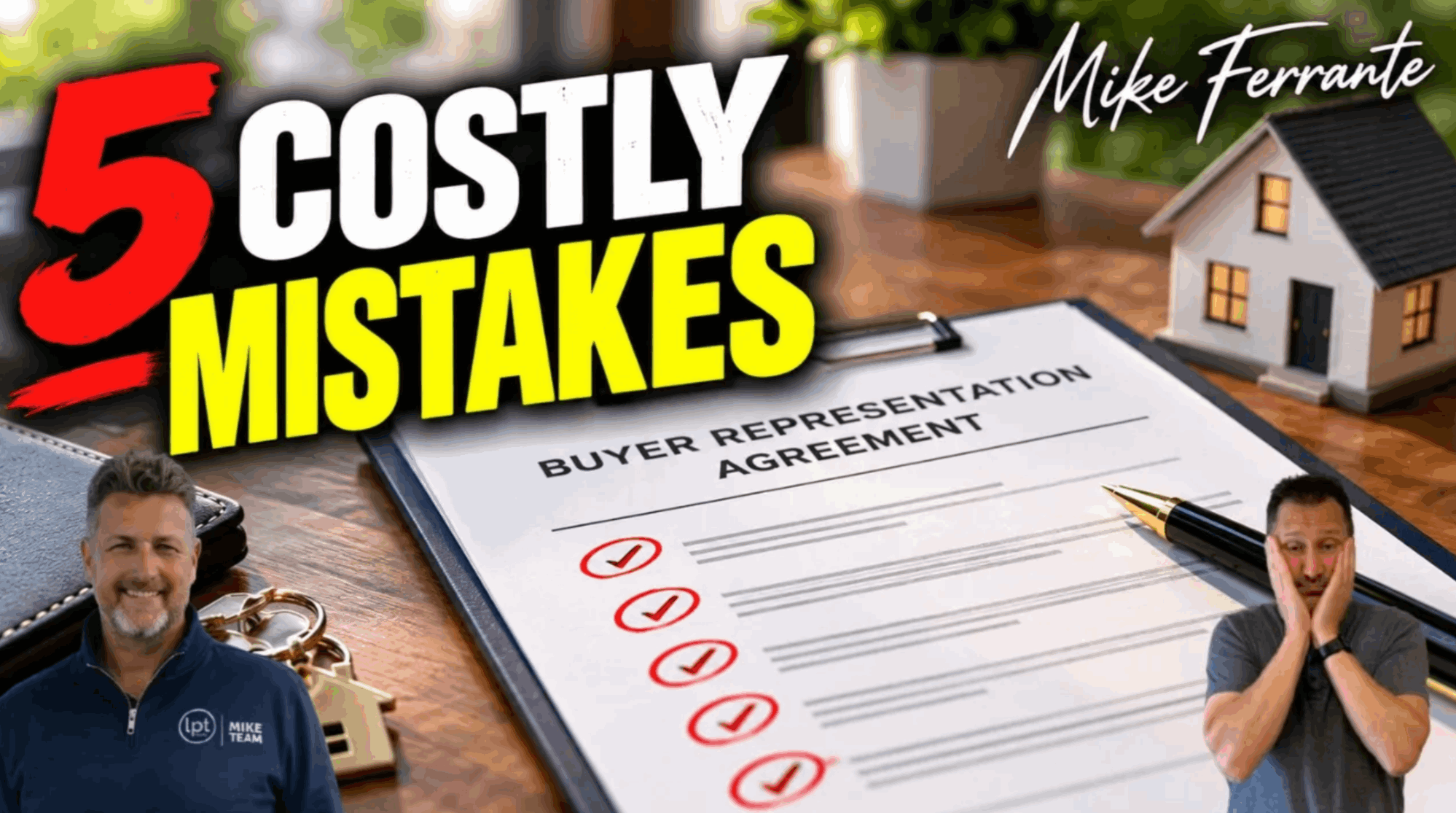
5 Buyer Agreement Mistakes That Can Get Real Estate Agents in Trouble
Since the industry settlement and Ohio's new law took effect, every agent has had to get comfortable with written buyer agreements. Most of us have. But I still see agents making mistakes on these agreements that could lead to fines, complaints, or worse, a problem with their license.
On a recent Tuesday training, Mike Pillow from our team and Scott, a broker in San Antonio, joined me to walk through the ones I see most. One ground rule first: we don't talk specific numbers in public. If you need to describe a fee, say "X." Your fee can be a percentage, a flat fee, a combination, even hourly. That's between you and your client.
And a disclaimer: we're realtors, not attorneys. Some of what follows comes from advice our attorney gave us. Talk with your own broker and legal counsel about your situation.
Mistake 1: Writing zero for compensation

Here's the scenario. You've done a great buyer consultation. The buyer says, "Mike, I don't have extra cash to pay you. I can't sign this if I might owe you X when the seller doesn't pay." So the agent says, "No problem, I'll just put zero in there."
The problem is that the number in the agreement is a maximum. In Ohio, the law says the buyer's brokerage can't accept more than the amount in the written agreement. Put zero, and zero is the most you can be paid, even if the seller is willing to pay the buyer's agent.
The way I explain it to buyers: it could always be less, but it can't be more. The number on the agreement is your guarantee that you'll never pay more than that.
Mistake 2: Raising your fee because the seller offered more
Some agents figure they can write X on the agreement, and if a seller or builder offers more, just amend it upward. It's their lucky day.
Amendments are allowed. But our attorney cautioned us about this. If the only reason you raised your compensation is that more was being offered, and that deal later ends up in a complaint or lawsuit, it looks bad. Picture a judge or the Division asking, "Your agreement said X and you changed it to more. What changed?" If the honest answer is "they offered more," you need a better reason than that, like additional work or services.
Scott pointed out this comes up most with builders who offer bonuses. If you plan to amend, do it well before you start touring new construction, not after you've seen the builder's offer.
As our attorney put it, it's only a problem if it's a problem. Most of the time nothing comes of it. But you don't want to find that out in a hearing.
Mistake 3: Open-ended bonus language

Can you write "X plus any bonus offered by a builder or seller" on a buyer agreement? No.
As Scott said, the compensation has to be a specific, clear amount, not something open-ended. Our attorney didn't even like "plus any bonus up to a certain amount." Her view was that it's a slippery slope, and if something goes wrong, it won't look good. Keep the number clear and specific.
Mistake 4: Showing homes without a signed agreement
In Ohio, this isn't only a trade association rule. It's state law. A buyer has to sign a written agreement before you show them a home. That could be an exclusive agreement, a non-exclusive agreement, or something that clearly documents you're not representing them.
I still hear buyers say, "I saw houses last weekend with another agent and they didn't make me sign anything." A buyer told my teammate David and me exactly that, after she'd already signed an exclusive with us. I didn't make a scene. I told her we'd keep doing things the right way, and that at some point she'd need to decide whether she wanted to work with two agents or with us.
Scott said he's never had an MLS audit his agents' buyer agreements. Fair enough. But in our market, ShowingTime makes you confirm you have a signed agreement before booking a showing. Our MLS also uses automated searches to catch compensation posted in listings, and I've heard of fines of $1,000 per violation.
And remember, there are testers out there whose job is to catch agents doing things wrong. From my years on our local board's grievance committee, I tell a story in my law and ethics class. One couple came into an office and was offered a bottle of water. Another couple of a different race had an identical appointment, but nobody offered them water. A complaint was filed, and that office paid a large fine over that one difference. The lesson is simple: do it right every single time, because you never know who's checking.
Mistake 5: Not showing your value

Ask Mike Pillow whether he works more hours with buyers or sellers and he'll tell you buyers, without hesitation. Gary Keller's The Millionaire Real Estate Agent estimated it at roughly three times the hours.
A lot of that time goes unpaid. I recently spent nine hours in one day with an out-of-town buyer. We wrote an offer, it was accepted, and after inspections she walked away and decided to rent. All that time, and no paycheck. Maybe she'll buy in a year. The public doesn't see the hours that never lead to a closing.
That's why I don't negotiate my fee on the front end. When a buyer asks if it can be less, I say, "Absolutely, it can be less. But to hire me today, with everything I just showed you in this consultation, this is what goes on the agreement. If it needs to be adjusted down the line, we'll talk."
Some buyers won't like that, and maybe they're not the right client. Or maybe you haven't shown your value yet. Either way, your value proposition shouldn't be that you work cheaper. The biggest mistake is caving instead of showing what you're worth, and agreeing too fast to a one-day agreement instead of earning an exclusive.
A note on unrepresented buyers
Some buyers assume that if they don't have an agent, there's no buyer commission, so the price should drop. Not necessarily. The listing agent has an agreement with the seller. And if the listing agent works with an unrepresented buyer, that's more work and more liability, which many agents account for in their listing agreement.
Why you want the agreement anyway
Mike Pillow got burned by a buyer years before any of this was required. From then on, he always had a signed agreement. As he says, why would you go into a deal without one? Without it, you're working without an employment contract and hoping you get paid. And hope isn't a plan.
If you want to practice these conversations, join our roleplay on Zoom every Saturday at 8:30 Eastern. Email me at mike@21mike.com and I'll send you the link. And if you're thinking about joining a team, let's talk.
Want to see the full session? Watch our Tuesday training on buyer agreement mistakes.
Mike Ferrante
The Mike Team at LPT Realty
www.21mike.com
Google Business Profile: https://g.page/r/CSQoYzel0Z68EAE
+1 (216) 373-7727
Categories
Recent Posts