
"Set Your Own Hours" Is a Myth: What Burnout Taught One of Our Agents About Boundaries

"Set Your Own Hours" Is a Myth: What Burnout Taught One of Our Agents About Boundaries
Real estate gets sold to new agents as the ultimate freedom. You're your own boss, you set your own hours, you build your own schedule. There's truth in that, but there's a flip side nobody talks about enough. This job can be brutally hard on your mental health, your relationships, and your physical health if you let it run unchecked. For Mental Health Awareness Month, I sat down with my teammate Ian Jones, who has closed nearly 500 transactions in seven years, to talk honestly about what burnout actually looks like in this business and what he did to pull himself out of it. You can listen to the full conversation on our podcast, Free Beer and Real Estate.
From One Demanding Career to Another

Before real estate, Ian spent about a decade as a pastry chef. He left the culinary world specifically to get away from its brutal, inflexible hours, only to find that real estate has its own version of the same problem. What he did carry over from culinary school was invaluable: a concept called mise en place, French for everything in its place. In a kitchen, that discipline is what keeps a dinner service from falling apart. In real estate, Ian applies the same principle to his systems, his spreadsheets, and how he plans his week. The lesson wasn't about escaping demanding work. It was learning how to organize around it.
The Real Problem Isn't Setting Hours, It's Keeping Them
Here's the myth Ian named directly: yes, you set your own hours in this business, but do you actually stick to them? A nine to five job comes with built-in structure. Real estate doesn't hand you that. You have to build the guardrails yourself, and then, harder still, you have to actually respect them. The moment you answer a text after your stated cutoff time, you've told your clients, and yourself, that the boundary was never real to begin with.
What 60 Active Listings at Once Actually Looks Like

Between 2020 and 2023, Ian closed around 350 transactions and managed another 200 to 300 listings that didn't ultimately sell. At his peak, in April of 2023, he had 40 active listings and 20 more under contract at the same time, 60 properties total. That volume came from working with a single large client, but the toll was still severe. His phone never stopped ringing. He started experiencing phantom vibrations, reaching for a phone that hadn't actually buzzed. He stopped sleeping through the night, running through his next day's game plan at midnight and waking again at 4 a.m. to run it again. He was eating fast food because he was constantly moving. The production numbers looked great from the outside. On the inside, it was unsustainable.
The Missing Commute
The turning point came when Ian sought out a therapist. One of the first things she pointed out reframed everything for him: cortisol, the stress hormone, naturally ramps up during a typical commute. Someone driving 20 or 30 minutes to an office has time for their body to gradually prepare for work mode, and time on the way home to come back down from it. Ian's office was a twenty foot walk from his bedroom. There was no ramp up and no ramp down. His stress response was spiking immediately, every single day.
His fix was to build an artificial commute into his routine. He stopped checking email the moment he woke up. Instead, mornings start with something disconnected from work entirely, coffee outside with his dog, scrolling social media, just existing for a bit before transitioning into work mode. He also stopped setting an alarm altogether and lets his body wake up when it's actually rested. Small changes, but they rebuilt the buffer his environment had erased.
"Don't Set Yourself on Fire to Keep Others Warm"
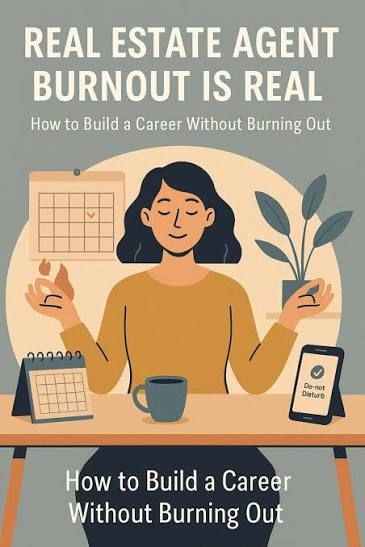
One line from Ian's therapist stuck with both of us: don't set yourself on fire to keep others warm. It's easy in this business to believe you're the only one who can fix a problem for a client, and to run yourself into the ground proving it. The truth is you're no use to anyone once you've burned out completely. It's the same logic as the airplane oxygen mask instructions. Put your own mask on first, then help the person next to you. Seeking help, whether that's therapy, prayer, or whatever works for you, isn't a weakness. It's what lets you keep showing up for your clients and the people in your own life without running on empty.
Tools That Actually Create Boundaries
A few specific tools Ian relies on to protect his time without abandoning his clients:
The Focus setting on iPhone lets him silence notifications during set hours, currently 8:30 p.m. to 9 a.m., while building in exceptions for close family and repeat callers. If someone calls twice within three minutes, the second call rings through, since that pattern usually signals something urgent.
Calendly lets clients book time directly rather than expecting an instant callback. Instead of getting caught off guard, Ian can glance at his morning calendar, see that someone booked a fifteen minute call to discuss selling at a specific address, and walk in prepared.
Our team's CRM, Lofty, keeps him on top of follow-ups, listing tasks, and client data without having to hold all of it in his head, which removes a huge amount of the background mental load that builds up over a busy week.
A specific voicemail message he still uses, one he actually picked up from me, redirects callers toward texting instead of expecting an immediate pickup: a short, friendly message letting people know a text usually gets a faster response than a missed call ever will.
And a small habit worth stealing: marking a text as unread after reading it, so it stays flagged as something to circle back to without demanding an instant reply in the moment.
Setting Expectations With Clients Up Front
I've had to have this conversation with my own clients too. One told me he was frustrated that he kept getting my voicemail. My answer was direct: I told him upfront when we started working together that I'm a busy agent who also manages a team, and that he'd reach my voicemail more often than not. The way around that is booking a specific time on my calendar, so when that appointment comes, he gets my full, undistracted attention instead of a rushed few minutes between other tasks.
Part of your value proposition as an agent is being honest about what you can and can't offer. If a client specifically wants someone who answers the phone nine times out of ten, that's a fair thing for them to want, and it's also fair for me to say that's not what I offer. Setting that expectation clearly, without apology, tends to earn more respect than pretending you'll always be instantly available and then quietly failing to deliver on it.
Personal Time Goes on the Calendar First
One habit that's made a real difference for our team: when we build out a weekly schedule, personal commitments go on the calendar first, not last. Vacations, date nights, family time. Work gets built around those blocks, not the other way around. If you only schedule work and hope to squeeze personal life into whatever's left over, the people who matter most to you end up getting the leftovers, and that takes a real toll over time.
Find the One Thing to Change
Everyone's tolerance for this business looks different, and there's no single formula that fits every agent. What matters is actually sitting down and asking yourself honestly what's causing you the most stress right now, and picking one real change to make about it, whether that's taking on fewer clients, building a real cutoff time into your evenings, or just finally talking to someone about how you're doing. The boundary itself usually isn't the hard part. Sticking to it is. That's true whether it's a work hour cutoff, a pricing conversation with a seller, or anything else in this business worth doing right.
If you want to talk through any of this, or you're a real estate professional in Northeast Ohio looking to connect, reach out anytime at mike@21mike.com.
Mike Ferrante
The Mike Team at LPT Realty
www.21mike.com
Google Business Profile
+1 (216) 373-7727
Categories
Recent Posts