Is Solon Worth the Higher Price? A Buyer's Tradeoff Test
Buyers who start looking in Solon notice the same thing quickly. Comparable houses often cost more here than in a lot of the surrounding suburbs. So the real question isn't whether Solon is a nice place to live. It's whether the extra money buys things you'll actually use. Here's the test I'd run.
Start with the Owner's View
Our team's shared approach is to think like an owner and weigh five things: value, condition, cost, risk and what happens next. Run the Solon premium through those five.
- Value: what you get for the price compared with a similar house a few miles away.
- Condition: what the house needs in the next five years.
- Cost: the full monthly payment, not the list price.
- Risk: what you're exposed to if rates, taxes or your income change.
- What happens next: how easy the house will be to sell when you're ready to leave.
Turn the price gap into a monthly payment

A price gap is hard to feel. A payment gap isn't. Take a Solon house and a similar house in a neighboring suburb. Give them the same down payment and the same rate, then add the actual property tax for each address. Taxes are built from the levies on each parcel, so they can differ even between houses in the same area.
At the 7.32% average 30-year rate Freddie Mac reported on October 22, every $100,000 of loan carries roughly $690 a month in principal and interest. So a $40,000 price gap on a financed house works out to about $275 a month before taxes and insurance. That's the number you're really deciding about.
What the premium usually pays for
In most higher-priced suburbs, the extra cost comes from three places: the school district, the strength of city services, and how well the area holds its value at resale. If you have kids in school or expect to, the district is likely the biggest piece. If you don't, you're paying today for something that shows up later, when the next buyer cares about it even if you don't. Both are legitimate reasons. Just know which one you're buying.
Questions to ask before you commit
Will you use what you're paying for? Parks, the drive to work and school fit usually matter more than a town's reputation. Does the house itself justify the price, or are you paying for the address on a house that needs a roof and a furnace? And what happens if you need to sell in five years? A higher entry price is fine if the area keeps drawing buyers. It becomes a problem when you stretch to get in and have nothing left for repairs.
How we search, so you don't miss the right house

When I teach agents how to set up a buyer search, I tell them to dig into what the buyer really needs before typing anything into the MLS. A buyer who says four bedrooms might be just as happy with three bedrooms and an office, and a search that only shows four will skip every one of those.
The same goes for price. A buyer approved for $180,000 should usually see houses a little above and below that number, not a hard stop. If Solon is your first choice, run the same search for a couple of neighboring suburbs and compare what you actually see side by side.
Don't buy the address and starve the house
The most common mistake I see is stretching to get into the name-brand town and then having nothing left for the house. A slightly cheaper house in a neighboring suburb with a newer roof and furnace can beat a stretched purchase in Solon.
That's also why the inspection matters more at a higher price, not less. Point-of-sale rules vary by city, so ask the City of Solon what applies to the house you're buying. Either way, the inspection that protects you is the one you order yourself. A higher price is a reason to inspect harder, not a reason to relax.
Test the resale story with sold data
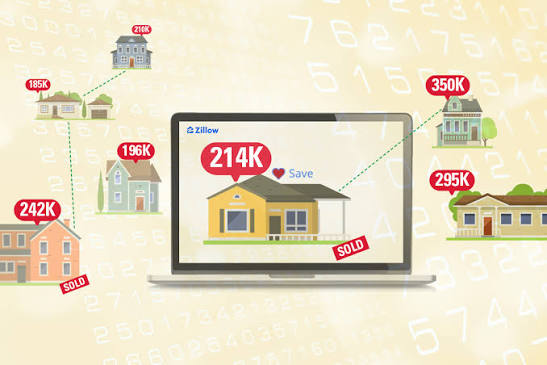
Pull the last 12 months of sold homes in Solon and in the suburb you're comparing it with. Look at days on market and how close homes sold to their list price. If Solon homes sell faster and closer to asking, part of the premium is paying you back at resale. If they don't, the premium is a pure cost. Either answer is fine as long as you choose it on purpose.
A practical way to decide
Write down your top three reasons for wanting Solon. Check each one against a house you could buy somewhere else. If two of the three survive the comparison, you probably don't need to pay the premium. If none do, Solon is likely the right call. Then pull current sold prices and the parcel's tax bill for any house you like, because those numbers change and they should drive the decision.
Our team's office is on Solon Road, so we see this decision from both sides every week. If you want help running the comparison on real houses, schedule a time with me or someone on our team at 21mike.com.
Mike Ferrante
The Mike Team at LPT Realty
www.21mike.com
Google Business Profile: https://g.page/r/CSQoYzel0Z68EAE
+1 (216) 373-7727
Categories
Recent Posts