
Is Your Akron Home in a Historic District? Here's What That Actually Means Before You List

Is Your Akron Home in a Historic District? Here's What That Actually Means Before You List

Some Akron sellers hesitate to list because they believe their home is in a "historic district." They assume a city commission has to approve their paint color, replacement windows, or new roof before they can get the house ready to sell.
That's usually not how it works. Akron has federally recognized historic districts and a local design review process, but they aren't the same thing. Mixing them up can cost you time and money, or make you delay a listing over a rule that never applied to your house.
Akron's National Register historic districts
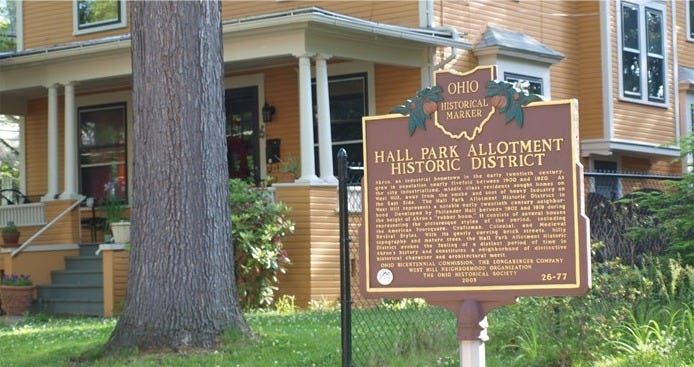
Akron has eight districts on the National Register of Historic Places, according to the list of National Register listings in Akron:
- Cascade Locks Historic District
- Cole Avenue Housing Project Historic District
- Hall Park Allotment Historic District
- Kenmore Boulevard Historic District
- Main Exchange Historic District
- Main-Market Historic District
- South Main Street Historic District
- Valley Railway Historic District, which runs beyond Akron's borders
If your home is in or near one of these, it's good to know. But it answers a different question than most sellers think.
What National Register listing actually means
National Register listing is mostly recognition, not regulation. The National Park Service, which runs the program, puts it plainly: "Under Federal Law, the listing of a property in the National Register places no restrictions on what a non-federal owner may do with their property up to and including destruction, unless the property is involved in a project that receives Federal assistance."
In practice, that means a homeowner in one of these districts can usually paint, re-roof, replace windows, or update landscaping before listing without federal approval, as long as no federal money, license, or historic tax credit is involved. That one fact changes the prep timeline for a lot of sellers.
When city review does apply
There is a local layer, and it's separate. Akron's Urban Design and Historic Preservation Commission "reviews and approves, approves with conditions, or denies requests for certificates of appropriateness to alter or raze structures listed as local historic landmarks." The commission also reviews applications to designate local landmarks and local districts. The city lists a $75 application fee for local landmark designation.
So the question to ask isn't "Am I in a historic district?" It's "Has my property, or the area it's in, been locally designated by the City of Akron?" Those are different lists. If you're not sure, a quick call to the city's planning department gets you the answer before you spend a dollar.
Historic character can help you sell
Being in a recognized district isn't just something to manage. For the right buyer, it's a selling point. Original woodwork, period details, and a neighborhood with a story are things some buyers specifically look for.
If your home sits in one of these districts, it's worth mentioning in the listing and showing off in the photos. Just be accurate. Don't call a home a "landmark" unless it's actually designated as one.
How to prep a historic-area home with an owner's mindset
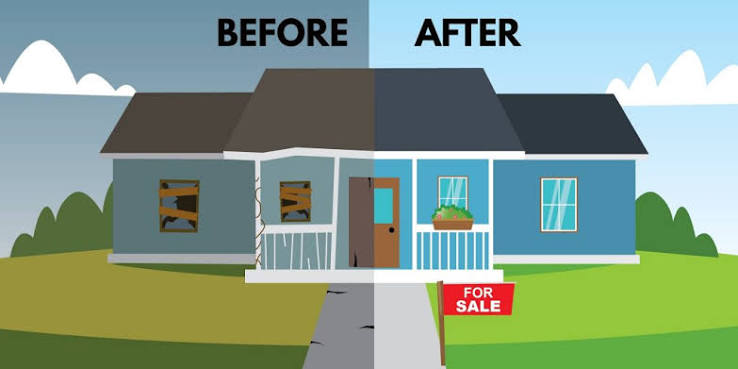
Our team looks at every listing through value, condition, cost, risk, and what happens next. For a seller in a historic area, that looks like this:
- Confirm your property's actual status with the city instead of guessing.
- Decide which updates will move value for buyers in your part of Akron, and which are just activity.
- Get a pre-listing inspection on an older home so you know what a buyer's inspector will find.
- Price for condition, using sales of comparable homes nearby.
Having done more than 50 flips through BAMCO Builders, I've seen owners spend heavily on period-perfect materials nobody required, when a simpler update would have looked just as good to a buyer.
The Summit County fee every seller pays
Whatever district your home is in, there's one cost you can calculate now. The Summit County Fiscal Office charges a conveyance fee of "$4.00 per $1000 rounded up to the next $100 of the sale price." On a $300,000 sale, that's $1,200, and in our area it's customarily paid by the seller at closing.
It's a small line item, but it's one of the few closing costs that's fixed and knowable in advance. Akron also doesn't require a city point-of-sale inspection, according to the Akron Cleveland Association of Realtors point-of-sale guide.
Questions Akron sellers ask about historic districts

Do I need permission to paint or replace windows before I list? Not because of National Register listing alone. City review applies to locally designated landmarks and districts, so confirm your property's local status first.
Will buyers ask about it? Some will, especially buyers who love older homes. Have a clear answer ready on whether your home is in a National Register district, locally designated, or neither.
Does being in a district lower my value? Not by itself. Condition, location, and comparable sales still drive price. For the right buyer, the history can be part of the appeal.
Thinking about selling in Akron?
If you own a home near Cascade Locks, Kenmore Boulevard, Main-Market, South Main Street, or any of Akron's historic areas, don't assume you're boxed in. Find out where your property actually stands first. If you want help with that, plus what your home is worth and which prep makes sense, schedule a time with me or someone on our team at 21mike.com.
Mike Ferrante
The Mike Team at LPT Realty
www.21mike.com
Google Business Profile: https://g.page/r/CSQoYzel0Z68EAE
+1 (216) 373-7727
Categories
Recent Posts